Copyright and Your Thesis
Online virtual eventDo you want to learn how to use copyrighted material in your research, and how to protect your own rights as an author? If so, this workshop is for you!
Do you want to learn how to use copyrighted material in your research, and how to protect your own rights as an author? If so, this workshop is for you!
Tired of solo writing sessions? Craving a supportive environment to fuel your creativity? Look no further than our weekly Writing Community, tailored for the UBCO community.
We’ll explore strategies and provide sample abstracts and lay summaries from diverse fields and purposes, including theses, conferences, and funding applications.
Tired of solo writing sessions? Craving a supportive environment to fuel your creativity? Look no further than our weekly Writing Community, tailored for the UBCO community.
Looking for data for your graduate thesis or post-doctoral project? This workshop will introduce you to both publicly available and restricted access Statistics Canada data, and how to apply to use restricted access data through UBCO Research Data Centre.
Researchers, meet your Okanagan research support team! Come join us to connect with friendly faces who are always there to support solutions for your scholarly communication and digital or data-intensive research needs.
Join us on an exciting journey into the world of data with our introductory workshops! This session will introduce participants to fundamental concepts in R that will help them excel at more advanced applications.
Do you want to practice your English speaking skills? Join our English Conversation Circle on March 1.
Do you want to learn how to use copyrighted material in your research, and how to protect your own rights as an author? If so, this workshop is for you!
Tired of solo writing sessions? Craving a supportive environment to fuel your creativity? Look no further than our weekly Writing Community, tailored for the UBCO community.
Researchers, meet your Okanagan research support team! Come join us to connect with friendly faces who are always there to support solutions for your scholarly communication and digital or data-intensive research needs.
Join us on an exciting journey into the world of data with our introductory workshops! This session will address importing Excel and comma separated value files into R for analysis.
Tired of solo writing sessions? Craving a supportive environment to fuel your creativity? Look no further than our weekly Writing Community, tailored for the UBCO community.
Researchers, meet your Okanagan research support team! Come join us to connect with friendly faces who are always there to support solutions for your scholarly communication and digital or data-intensive research needs.
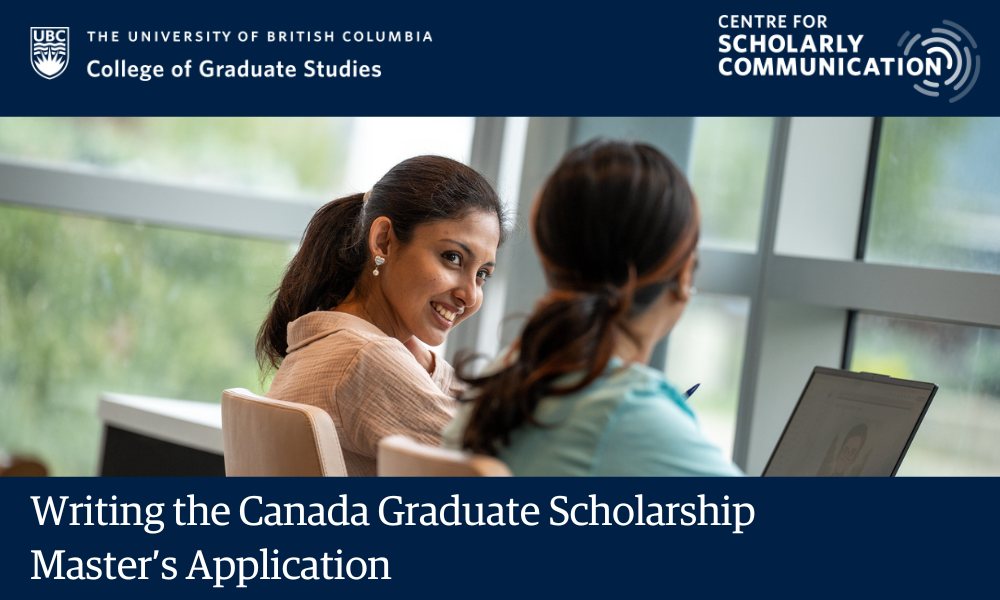
This online Q&A session, facilitated by the College of Graduate Studies and the Centre for Scholarly Communication, provides an opportunity to ask questions about writing and submitting the application.
In this session we will walk you through some strategies for finding open content to adapt, or include within your learning resources, as well as best practices for attribution.
Join us on an exciting journey into the world of data with our introductory workshops! This session will introduce participants to common tasks of initial data exploration.
Join us for a discussion with Taylor & Francis VP External Affairs and Policy, Priya Madina, on AI and academic publishing.
Tired of solo writing sessions? Craving a supportive environment to fuel your creativity? Look no further than our weekly Writing Community, tailored for the UBCO community.
Unlock the secrets of crafting impactful literature reviews in this interactive online workshop for graduate students. Discover how to synthesize existing research succinctly while maintaining your own critical perspective and voice.
Whether you are looking for training for yourself or your research assistants, this training will cover the basics of how to use Pressbooks to create and enhance content.
Drop in to the Accessibility Studio for one-on-one guidance from specialists about designing course materials and OER so they are more accessible for all students.
Researchers, meet your Okanagan research support team! Come join us to connect with friendly faces who are always there to support solutions for your scholarly communication and digital or data-intensive research needs.
Join the Centre for Scholarly Communication for an online Q&A session to ask questions and learn more about how to properly format your thesis for submission.
In this session we will discuss the potential of AI in generating dynamic content, including interactive textbooks, and its potential in developing open educational resources and practices.
3333 University Way
Kelowna, BC Canada V1V 1V7
Tel 250 807 8000
We respectfully acknowledge the Syilx Okanagan Nation and their peoples, in whose traditional, ancestral, unceded territory UBC Okanagan is situated.